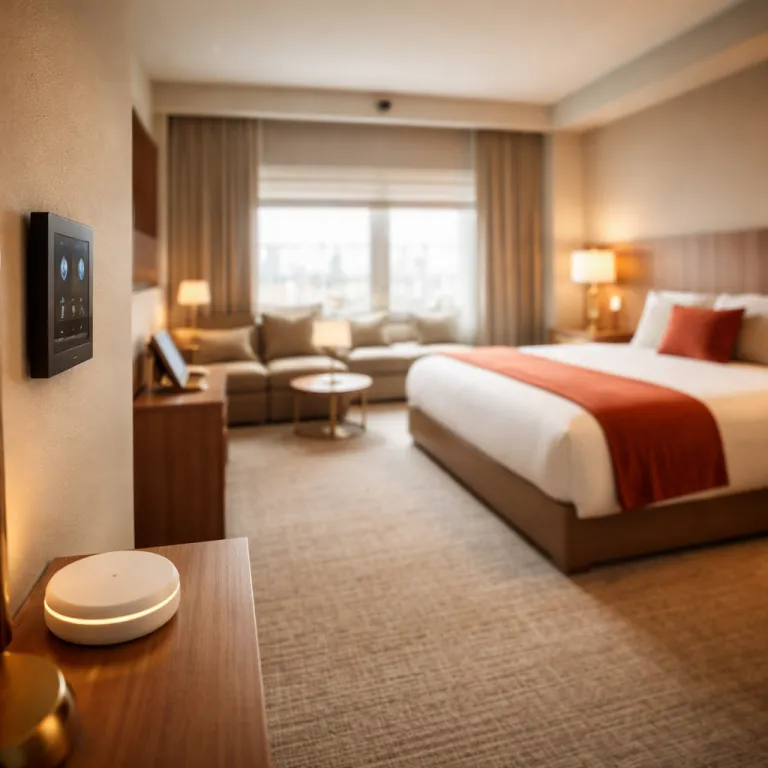
What smart hotel room technology really means for frequent travelers
Smart hotel room technology is no longer a trade show fantasy. In many luxury hotels, the room now behaves less like a static space and more like a responsive system that learns from each guest. For business travelers who treat hotel rooms as a second office, this new generation of connected hospitality is quietly changing the rhythm of every stay.
At its core, modern smart hotel rooms combine connected devices, artificial intelligence and cloud based hotel technology to automate lighting, temperature, curtains and entertainment. These systems sit on the same secure digital backbone as property management, revenue tools and staff communication platforms, which means the hospitality industry can finally link guest experience with operations in real time. When done well, the technology fades into the background and guests simply feel that the room understands what they need before they reach for a switch.
According to the Hotel Technology Benchmark Report 2024 by Codelevate (global sample of 4,200 properties across 32 countries), around 63% of hotels now offer some form of mobile key or kiosk check in, while 51% use smart energy systems to manage rooms when guests are away. Those numbers matter because they show that smart rooms are moving from isolated pilots to standard hotel rooms in both city and resort properties. For travelers choosing a hotel, the question is no longer whether the technology exists, but whether the specific room technology in a chosen hotel room has been thoughtfully configured for real people rather than for a marketing brochure.
From mobile keys to mood lighting: the smart features you actually use
Walk into a well designed smart hotel today and the first interaction is usually digital rather than at the front desk. Mobile keys, app based check in and contactless payments have become the quiet workhorses of connected room technology, trimming queues and giving guests back precious minutes. For the executive arriving after a late flight, being able to move straight from car to room without paperwork is not a gimmick; it is a reset button.
Once inside, the most appreciated smart technology is often the simplest to operate. Central room controls on a bedside tablet or wall panel let guests adjust lighting scenes, blinds and temperature without hunting for switches scattered around the room, while algorithmic mood lighting shifts colour temperature through the day to support focus or rest. In coastal villas and Mediterranean retreats, such as the elegant villas in Sardinia highlighted in this refined Mediterranean escape guide, smart rooms increasingly blend these systems with natural light and terrace access so that technology trends enhance, rather than replace, a sense of place.
Behind the scenes, hotel owners rely on integrated systems to balance guest satisfaction with energy use and revenue protection. Smart thermostats ease back when sensors show that rooms are empty, while real time data from connected devices feeds into energy dashboards for hotel management and engineering staff. For travelers, the visible result is a hotel room that feels consistently comfortable without the familiar blast of overcooled air, and a hospitality industry that can talk credibly about sustainability rather than just placing a card next to the towels.
Voice, AI and the line between helpful and over engineered
Voice control is the most visible face of intelligent hotel room systems, but it is also where frustration appears fastest. When a guest says "lights off" and nothing happens, the promise of a smart room collapses into irritation, especially for travelers who just want to sleep. The hospitality industry has learned that voice must complement, not replace, intuitive physical room controls.
In the best smart hotels, voice assistants handle clear, high value tasks such as setting wake up alarms, adjusting temperature by a few degrees or ordering room service without navigating a phone menu. These devices connect to hotel technology platforms that route requests directly to staff smartphones, closing the loop between guest voice and human response. As the 2023 Smart Hospitality Roadmaps briefing by We Heart and the Skift Smart Hospitality Trends analysis both note, "voice controlled environments", "energy positive smart rooms" and "AI powered revenue management" now sit on the same strategic roadmap, forcing hotel owners to think about how artificial intelligence touches both the guest experience and the balance sheet.
Personalisation is where artificial intelligence becomes genuinely anticipatory rather than merely reactive. Hotels applying real time analytics can pre warm a returning guest’s preferred room type, pre load streaming services and even adjust minibar contents based on previous stays, as explored in Skift’s 2023 report on how hotels use AI to know you before arrival. At the Sinclair, an Autograph Collection hotel in Fort Worth, a partnership with IoT vendor Enseo helped cut in room energy use by roughly 30% while maintaining guest satisfaction scores above 90%, according to internal case studies shared by Enseo and the Peninsula London at the 2024 Hotel Tech Forum. The challenge for management and staff is to use data with restraint, so that guests feel recognised but not surveilled, and so that every comment about technology trends remains focused on comfort rather than control.
How leading properties integrate smart rooms into the whole stay
Smart hotel room technology only delivers its full value when it is woven through the entire hospitality operation. A room can be filled with the latest devices, but if staff cannot see or act on the data, the guest experience will still feel disjointed. The most forward thinking hotels treat technology as an invisible concierge that supports both guests and teams.
Consider a coastal villa where the smart room system links to arrival information, local weather and housekeeping schedules. When a guest’s flight is delayed, the hotel technology platform can automatically adjust welcome lighting scenes, reschedule room service and notify staff to hold a preferred table in the restaurant, all based on real time systems data. Properties such as the ocean view retreat featured in this guide to serene ocean view villa escapes show how rooms smart enough to respond to changing conditions can still feel deeply personal and locally grounded.
For hotel owners, the integration of hospitality technology into operations is as much about management discipline as it is about devices. Energy dashboards, predictive maintenance alerts and AI powered revenue tools all sit alongside guest facing room technology on the same digital platforms, giving leadership a single view of performance. At the Peninsula London, for example, integrating guest room tablets with the property management system and service dispatch tools cut average response times for in room requests by 25% in the first six months, according to internal case studies shared at the 2024 Hotel Tech Forum. In practical terms, that kind of integration typically involves a one time implementation project of several months, vendor led API configuration and staff training workshops, followed by ongoing software subscription fees that scale with room count. When these systems are aligned, staff can move from firefighting to proactive service, and guests simply experience a hotel room that works flawlessly from check in to check out without needing to understand the complexity behind it.
What to ask for when booking a tech forward hotel
Travelers booking through a luxury and premium accommodation platform should treat smart hotel room technology as a filter, not a buzzword. The goal is to match the level of technology in the hotel room with your own comfort level and travel purpose. A week of back to back meetings demands different room technology than a slow coastal retreat.
When reviewing hotels, look beyond generic claims about smart rooms and ask specific questions. Does the property offer app based room controls, or only a basic digital key? Can guests choose whether their data from previous stays is used to pre set lighting, temperature and entertainment, and is there a clear comment in the privacy policy about how long that data is stored? For frequent travelers, the ability to opt in to personalisation while retaining control over data is now as important as the thread count of the sheets.
It is also worth clarifying how smart technology interacts with human service. Some hotels route all room service orders through tablets, while others maintain a direct line to staff who can respond to nuanced requests that no interface can capture. Ask whether the hotel has on site staff trained to troubleshoot devices and systems, because even the best hospitality technology can fail without a capable équipe behind it. The most satisfying guest experience usually comes from hotels where digital transformation enhances, rather than replaces, the art of attentive hospitality.
Balancing privacy, control and comfort in smart hotel rooms
As connected room solutions become standard, privacy and control are moving to the centre of the conversation. Guests are right to ask how their preferences, behaviours and in room interactions are captured and used by the hospitality industry. The answer should be transparent policies, clear opt outs and visible controls inside the room.
In a well designed smart hotel, every connected device has a clear purpose that guests can understand at a glance. Microphones on voice assistants can be muted with a physical switch, occupancy sensors are used for energy management rather than surveillance, and cameras are never placed inside hotel rooms. Hotels that take this stance seriously often see higher guest satisfaction scores, because travelers feel that the benefits of smart technology are delivered without hidden trade offs.
From an industry perspective, the next phase of digital transformation will be about governance as much as innovation. Hotel owners will need robust data management frameworks, clear staff training and regular audits of hospitality technology vendors to ensure compliance with evolving regulations. For guests, the practical takeaway is simple; choose hotels that explain their systems openly, give you control over room controls and data sharing, and treat technology as a means to deepen comfort rather than as a spectacle.
Key figures on smart room technology in luxury hospitality
- The Hotel Technology Benchmark Report 2024 by Codelevate indicates that around 63% of hotels now provide mobile keys or self service kiosks, showing how digital access has become a mainstream expectation rather than a premium add on.
- The same Codelevate study reports that approximately 51% of hotels use smart energy systems to manage heating, cooling and lighting in rooms, a shift that supports both sustainability goals and lower operational costs for hotel owners.
- Real time analytics tools are in use at about 47% of properties, according to Codelevate’s 2024 dataset, allowing management and staff to monitor occupancy patterns, respond faster to maintenance issues and refine guest experience strategies.
- Industry surveys summarised in Skift’s 2023 report Personalisation in Hospitality suggest that more than half of travelers report a noticeably improved stay when hotel technology is used to personalise room settings and services, underlining the commercial value of thoughtful smart room investments.
- We Heart’s 2023 Smart Hospitality Roadmaps briefing notes that voice activated environments and AI powered revenue management are now cited together in hospitality technology strategies, reflecting a move toward integrated systems where guest facing devices and back of house platforms share the same data foundations.
FAQ about smart hotel room technology
What is smart hotel room technology ?
Smart hotel room technology is the integration of connected devices and artificial intelligence to automate and coordinate features such as lighting, temperature, curtains and entertainment in a hotel room. These systems communicate with central hotel technology platforms so that settings can respond to guest preferences and occupancy in real time. The aim is to enhance comfort, efficiency and sustainability without adding complexity for guests.
How do smart hotel rooms enhance the guest experience ?
Smart hotel rooms enhance the guest experience by giving travelers simple, centralised control over their environment and by anticipating needs based on previous stays. Guests can adjust room controls through touch panels, mobile apps or voice commands, while the system quietly manages energy use and maintenance in the background. When configured well, these rooms feel more intuitive and responsive than traditional hotel rooms, especially for frequent travelers.
Are smart hotel rooms more energy efficient than traditional rooms ?
Yes, smart hotel rooms are generally more energy efficient because sensors and automation reduce unnecessary heating, cooling and lighting. When a room is unoccupied, the system can ease back to an eco mode and then restore preferred settings shortly before the guest returns. This approach helps hotels cut energy costs while supporting broader sustainability commitments.
Can guests control smart hotel rooms via mobile apps ?
Many hotels now offer mobile apps that allow guests to unlock doors, adjust temperature, change lighting scenes and request room service from their own devices. These apps connect to the same management systems that staff use, so requests can be handled quickly and tracked in real time. Travelers who value this level of control should check whether a property’s app supports in room controls or only handles check in and key functions.
What are typical features of a smart hotel room ?
Typical features of a smart hotel room include app or card based access, centralised lighting and climate controls, smart thermostats, automated curtains and integrated entertainment systems. Many smart rooms also offer voice assistants for simple commands, as well as occupancy sensors that adjust settings when guests leave or return. In higher end properties, these elements are combined with AI driven personalisation so that returning guests find their preferred environment already in place.
References
- Codelevate, Hotel Technology Benchmark Report 2024, global hotel technology adoption benchmarks and smart room penetration figures.
- We Heart, Smart Hospitality Roadmaps 2023, briefing on voice controlled environments, energy positive smart rooms and integrated guest innovation.
- Skift, Personalisation in Hospitality 2023, report on hotel digital transformation, AI driven personalisation and guest experience technology.