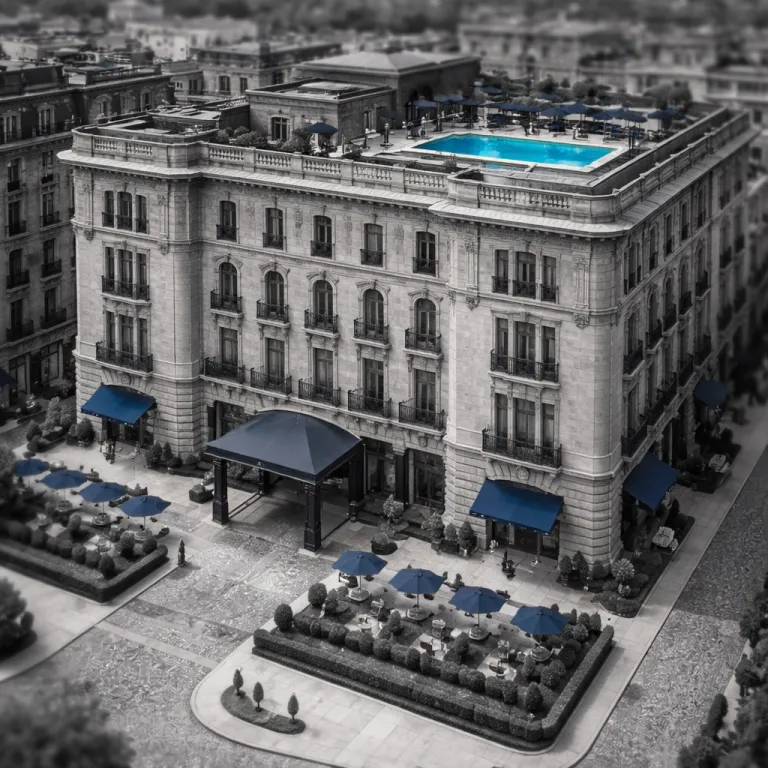
Heritage hotel conversion luxury 2026 as the new benchmark
Heritage hotel conversion luxury 2026 signals a shift in what discerning guests now value most. They want hotels where the staircase, the vault door or the cornice moulding already tells a story before the first glass of Champagne is poured. In a market where hundreds of historic properties worldwide already compete for attention, the hotels that treat the building as the narrative spine are the ones that stand out.
Adaptive reuse has become the most compelling form of luxury for couples planning meaningful travel, because it combines preservation, contemporary design and serious comfort in one stay. The approach that developers, architects and hotel operators now call adaptive reuse is no longer niche hospitality theory; it is the strategy that will bring new life to banks, palaces and civic landmarks in every major city. For travelers comparing luxury hotels, the question is no longer whether a hotel will offer a spa or generous rooms and suites, but whether the heritage is strong enough to make the stay feel unrepeatable.
Recent hospitality surveys consistently show that a clear majority of luxury travelers want history woven into their journeys. That demand explains why hotel openings increasingly focus on adaptive heritage conversions rather than anonymous new builds, and why these hotels often command premium rates despite higher maintenance costs. Industry definitions from organizations such as UNESCO and ICOMOS broadly agree that a heritage hotel is one operating in a historic building while preserving its original architecture and cultural significance, a description that now underpins many high-end conversion projects.
Fairmont New Orleans and the rise of vertical heritage luxury
Few projects capture the new wave of heritage-led luxury as vividly as the planned Fairmont New Orleans, where a former 31-storey Bank of New Orleans tower is being reimagined as a vertical retreat. Public planning documents and brand announcements indicate that the hotel will bring around 250 luxury rooms and 40 suites, three ambitious dining venues, a rooftop bar and roughly 1,860 square metres of event spaces into one slender downtown building. For couples who like their history with skyline drama, those panoramic views over the Mississippi will be as much a part of the story as the marble in the former banking hall.
This Fairmont hotel is expected to feature a careful balance between preservation and contemporary design, keeping the gravitas of a financial institution while softening it with warm hospitality cues. Guests can anticipate suites private enough for romantic weekends, yet still connected to the buzz of New Orleans culture and live music. For destination weddings or milestone celebrations, the combination of historic vaults, flexible event spaces and elevated service offers a persuasive alternative to a conventional resort ballroom.
Developers and architects behind this conversion treat heritage as an asset class rather than a decorative theme, one that rewards thoughtful investment. They work with local government and preservation organizations to retain original façades and public spaces, while integrating modern wellness facilities, a discreet spa and efficient back-of-house systems. If you are tracking the most interesting hotel openings for an upcoming trip, bookmark our guide to timeless destination celebration venues as a reference point for how historic architecture can frame unforgettable events.
Waldorf Astoria London Admiralty Arch and ceremonial grandeur
Across the Atlantic, the same conversion trend takes a more ceremonial form at Waldorf Astoria London Admiralty Arch. Here, Archer Humphryes Architects are transforming a building originally designed for state processions into one of the most anticipated luxury hotels in London. According to publicly available planning submissions and brand statements, the hotel will feature rooms and suites that look directly onto some of the capital’s most symbolic avenues, turning every window into a private royal box.
Where many hotels chase a generic international brand aesthetic, this project leans into the building’s civic gravitas and layered history. Guests will move through stone corridors once reserved for officials, now softened by contemporary design, curated art and a service style that understands both discretion and theatre. For couples, the appeal lies in waking up inside a landmark rather than merely near it, with hospitality that feels tailored rather than templated.
Waldorf Astoria’s approach shows how a global brand can respect local heritage without diluting its own identity. The hotel will offer refined dining venues, intimate suites private enough for long weekends and event spaces suited to understated celebrations rather than mass conferences. Travelers who already appreciate historic guest houses in Scotland or characterful townhouses will find a similar emotional pull here, and our feature on refined historic guest houses offers useful parallels in how small details keep a building’s soul intact.
Amangani Jackson Hole and the mountain retreat reimagined
The current wave of heritage hotel conversion luxury 2026 is not limited to urban landmarks; it also reshapes remote retreats like Amangani in Jackson Hole. This mountain hotel has long been a benchmark for understated luxury, and its meticulous renovation shows how to refresh a classic without erasing its sense of place. When the property returns after its current works, guests will find an expanded spa, a new Presidential Suite and reworked dining spaces that frame the valley’s panoramic views even more dramatically.
Amangani’s evolution illustrates the tension between preservation and modernization that every serious heritage project must navigate. The stone, timber and low-slung architecture that first defined the resort remain, but the rooms and suites now integrate quieter air conditioning, better lighting and more intuitive technology. Couples who value wellness will appreciate the enlarged spa and retreat-style programming, while still feeling anchored to the original mountain narrative that made this hotel a cult favourite.
For travelers comparing heritage-focused stays in 2026, Amangani sits in the same conversation as European legends like Orient Express properties or Italian icons such as Villa San Michele, often referred to simply as San Michele. Each of these hotels offers a different expression of heritage, yet all share a commitment to authenticity over trend chasing. If you are planning a future escape, our curated overview of the most interesting upcoming hotel openings will help you decide whether your next stay should be urban, coastal or high altitude.
Why heritage conversions beat copy paste luxury
Heritage hotel conversion luxury 2026 has become the strongest play in high-end hospitality because it resists homogenization. A former bank in New Orleans, a ceremonial arch in London and a mountain retreat in Wyoming cannot be replicated on another corner, no matter how deep the brand’s pockets. That uniqueness is precisely what couples now seek when they scroll through hotel listings late at night, weighing one stay against another.
Global brands such as Park Hyatt, Hyatt, Orient Express and Zannier Hotels have all leaned into heritage projects because they understand the commercial logic. These conversions often require more capital and more negotiation with heritage bodies, yet the resulting luxury hotels can sustain higher rates and stronger loyalty because the experience feels singular. For guests, the value lies not only in the spa or the suite’s private terrace, but in the knowledge that the same stay simply does not exist elsewhere on the planet.
From island resorts in former colonial outposts to city hotels carved out of grand post offices, the pattern is clear. A well-executed heritage resort offers both emotional resonance and practical comfort, provided the architects respect the original structure while integrating modern wellness, efficient circulation and generous event spaces. As one industry FAQ from major tourism boards and hotel associations reminds travelers with refreshing simplicity: “Why are heritage hotels popular? They offer unique experiences and a connection to history.”
How to choose and book a heritage conversion for your next trip
For couples planning a romantic escape, the first step in navigating heritage hotel conversion luxury 2026 is to decide what kind of story you want the building to tell. A former bank like the Fairmont New Orleans offers urban energy and rooftop cocktails, while a ceremonial landmark such as Waldorf Astoria London Admiralty Arch leans towards pageantry and city views. A mountain retreat like Amangani, or an island resort from brands such as Zannier Hotels, shifts the focus to landscape and elemental calm.
Once you have chosen the narrative, use a simple checklist to compare options: confirm how the hotel balances original architecture with modern comforts; identify which rooms and suites have the best panoramic views; check that at least one suite category is private enough for long weekends away from email; review whether the spa offers serious wellness programming; and see if dining venues and event spaces can flex between celebrations and more intimate lounge-style use.
Finally, book early, especially for headline hotel openings linked to heritage hotel conversion luxury 2026, because occupancy in this segment regularly hovers around three-quarters full according to industry benchmarking reports. Read beyond the brand marketing to understand how developers, architects and operators talk about preservation, and do not hesitate to contact the hotel directly with specific questions about noise, access or room configuration. “Are heritage hotels more expensive? Often, due to their uniqueness and maintenance costs.”
FAQ
What exactly defines a heritage hotel conversion in the luxury segment?
A heritage hotel conversion in the luxury segment is a property where an existing historic building is adapted into a high-end hotel while preserving key architectural elements. The project typically involves collaboration between developers, architects, local government and heritage organizations to balance authenticity with modern comfort. In the context of heritage hotel conversion luxury 2026, these hotels often add advanced wellness facilities, refined dining venues and upgraded rooms and suites without erasing the original character.
Are heritage luxury hotels always more expensive than new builds?
Heritage luxury hotels are often priced higher than comparable new builds because their maintenance, restoration and compliance costs are significantly greater. Guests are effectively paying for both the tangible services and the intangible value of staying inside a unique piece of architecture. That said, shoulder-season rates or opening offers can make some heritage hotel conversion luxury 2026 projects surprisingly accessible for couples with a mid to high budget.
How can I tell if a heritage conversion respects the original building?
A respectful heritage conversion usually retains the main façade, key interior volumes and signature details such as staircases, cornices or original stonework. Look for hotels that explain their restoration approach clearly, reference conservation partners and show before-and-after images that highlight continuity rather than total reinvention. In the best examples of heritage hotel conversion luxury 2026, contemporary design feels layered onto the building rather than imposed against it.
Do heritage luxury hotels offer the same level of wellness and spa facilities?
Many heritage luxury hotels now match or exceed the wellness and spa facilities of modern resorts, though the layouts can be more intricate because of structural constraints. Leading conversions integrate compact yet sophisticated spa areas, fitness rooms and sometimes pools into former service spaces or courtyards. When researching heritage hotel conversion luxury 2026 options, check floor plans and descriptions to ensure the wellness offering aligns with how you like to unwind.
Is it necessary to book heritage luxury hotels far in advance?
Advance booking is strongly recommended for heritage luxury hotels, especially in popular cities or during peak seasons. These properties often have fewer rooms and suites than large new-build resorts, and their most desirable suites, private with panoramic views, sell out quickly. For headline heritage hotel conversion luxury 2026 openings, securing dates several months ahead will give you the best choice of categories and rates.